
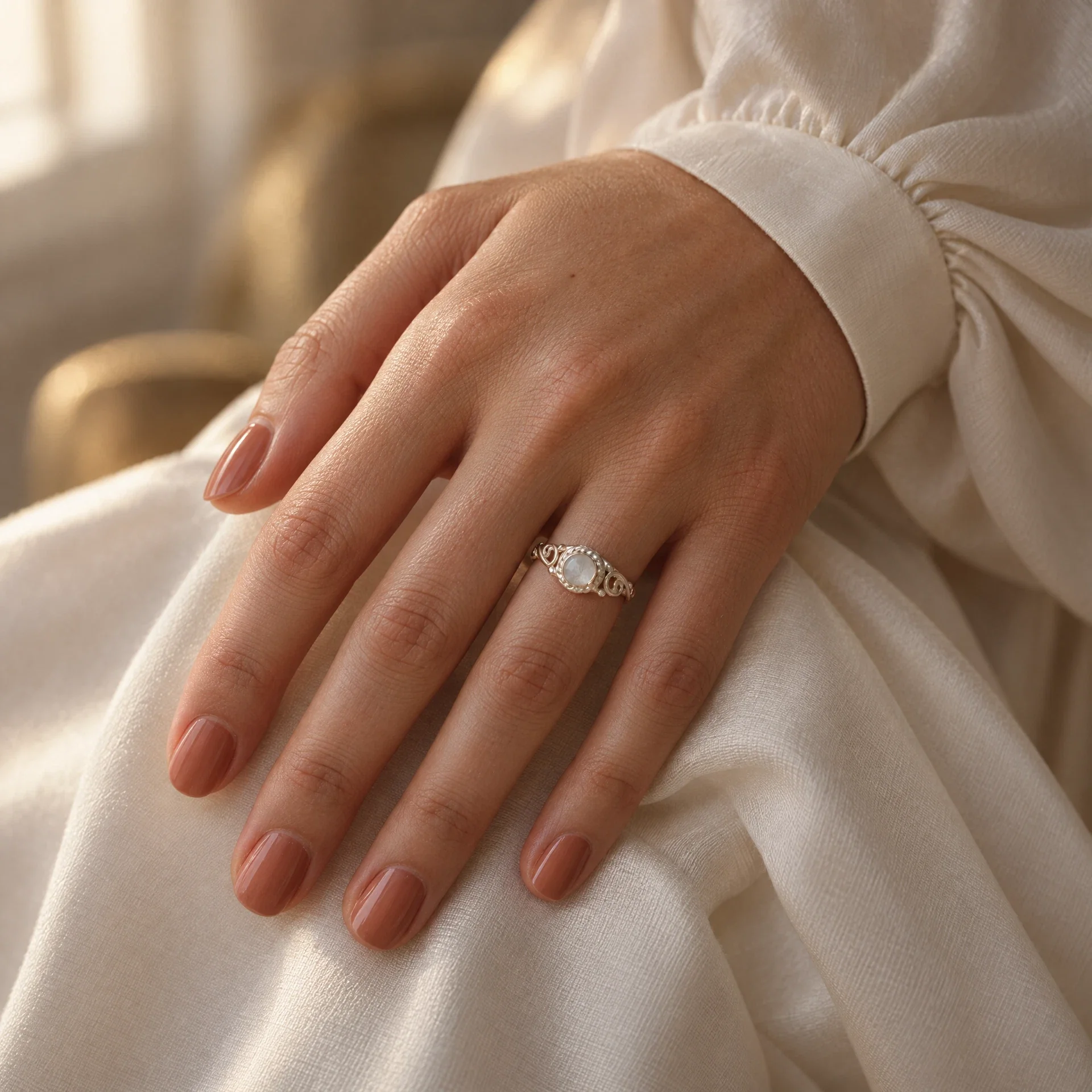
A meaningful piece of milestone jewelry starts with a question: what should this object help someone remember? The answer might be a graduation, a partnership, a new chapter in parenthood, or an achievement that nobody else noticed. A modern keepsake approach gives that meaning room without requiring a large gemstone, an obvious symbol, or a formal presentation. The aim is not to make the occasion look important. It is to choose something that feels connected to the person and remains comfortable in their life.
The strongest milestone jewelry choices balance three things: the significance of the moment, the recipient’s existing habits, and the practical limits of the piece. A necklace may carry a private association while looking entirely ordinary to others. A ring may feel wonderfully visible but become inconvenient during work. Neither choice is inherently more meaningful. Before comparing designs, decide whether the keepsake is meant for frequent wear, occasional use, or simply keeping close. That distinction makes the remaining decisions clearer.
Begin with the person, not the occasion
For milestone jewelry, observation is often more useful than a gift guide. Notice whether the recipient wears earrings daily, removes rings to work, prefers short necklaces, or avoids jewelry altogether. Look at proportions as well as categories: someone who wears fine chains may not enjoy a heavy pendant, even if its symbolism is perfect. For example, a graduation gift for a new laboratory worker might be better suited to off-duty wear than daily workplace use. Their actual routine should guide the choice.
Separate the message from the design when choosing milestone jewelry. Write the message in one sentence: “You made a difficult change,” “We built this together,” or “This chapter deserves remembering.” Then consider several ways to express it. A circle could suggest continuity; paired elements could represent a relationship; a color could recall a place. These are personal interpretations, not universal meanings. A recognizable birthstone or initial can be lovely, but it is not necessary when the connection is understood by the wearer.
A surprise is only one way to give milestone jewelry, and not always the best one. An anniversary recipient may welcome choosing together, especially when ring size, chain length, or metal preference is uncertain. For example, a giver could offer a handwritten note describing the intended keepsake and invite the recipient into the decision. This preserves the emotional gesture without forcing an unsuitable object. Browsing the D LOVE JEWELRY collection showcase can help start that conversation; it should not be treated as confirmation of current availability.
Set a budget boundary for milestone jewelry before the symbolism makes every upgrade feel essential. Consider not just the initial expense, but possible sizing, maintenance, and future repair costs, which depend on the design and provider. A modest, well-chosen piece may be more welcome than an expensive one that creates anxiety about loss. If consulting D LOVE JEWELRY, ask for confirmation of current pricing and any relevant options rather than assuming a displayed example can be purchased or altered. Meaning does not increase automatically with spending.
Make the meaning wearable
Good milestone jewelry has a workable relationship with the body. For necklaces, consider where the pendant rests, whether it catches on clothing, and whether the clasp is manageable for the recipient. For earrings, weight and movement matter alongside appearance. Rings need attention to fit, profile, and activities involving gripping or gloves. Exact dimensions are more informative than photographs alone. Ask for measurements and construction details where available, and remember that an appealing close-up does not show how a piece feels over several hours.
Visibility is another useful decision point for milestone jewelry. A public-facing symbol can invite questions, which some wearers enjoy and others would rather avoid. For example, a retirement keepsake might openly reference a profession, or it might use a discreet shape associated with a favorite trip taken afterward. Neither needs to summarize an entire identity. When the occasion involves a difficult transition, a private reference can be especially considerate: the wearer controls whether to explain it, instead of the object announcing the story for them.
Choose the degree of permanence in milestone jewelry deliberately. A date or name can make a piece unmistakably personal, but it can also narrow how the wearer relates to it later. An abstract design leaves more interpretive space, though its connection may be less immediately clear. If engraving or another personalized feature is important, ask D LOVE JEWELRY to confirm whether it is currently possible, which surfaces are suitable, and what limitations apply. Do not assume that every design shown can accommodate a requested inscription.
Think about how milestone jewelry will sit beside what the recipient already owns. A pendant intended for layering needs enough separation from neighboring chains to reduce tangling and rubbing. A ring worn next to another ring may create friction between settings or bands. Matching every metal color is not essential, but matching the wearer’s comfort with contrast is helpful. The everyday jewelry showcase offers a starting point for considering wearable styles; compare the ideas with the recipient’s routine rather than treating visual coordination as the only goal.
Understand materials and sensitive keepsakes
Material language deserves careful attention when selecting milestone jewelry. Solid gold, gold-filled, and gold-plated descriptions do not mean the same thing; gold-filled should not be understood as solid gold. Sterling silver is at least 925/1000 silver. In U.S. materials guidance, vermeil descriptions have specific FTC conditions, so the word is more than a general label for a gold-colored finish. Ask for the stated metal, fineness where relevant, and any surface treatment. A hallmark can provide information, but it is not independent proof of authenticity.
The right material for milestone jewelry depends partly on how it will be used. Surface finishes can change with wear, and delicate settings may need more attention than simple profiles. A gemstone’s suitability cannot be judged by color alone; resistance to scratching and resistance to breakage are different properties. Ask about the specific stone, setting, and recommended care rather than assuming all clear or similarly colored gems behave alike. If the wearer has known sensitivities, request clear material information without relying on a blanket “hypoallergenic” promise.
When milestone jewelry involves remembrance, the recipient’s readiness matters more than the gifting calendar. A cremation keepsake should never arrive as a surprise that requires someone to provide personal material or explain their feelings. Some people value such an object; others do not want one, now or ever. The cremation keepsake information page may support a gentle conversation. Before sending anything, obtain written instructions, confirm what is currently possible, and check applicable local information. Avoid assumptions about quantities, transport requirements, or long-term durability.
A parenthood keepsake can also require sensitive choices, particularly when milestone jewelry incorporates breast milk or another personal element. The experience of feeding and early parenthood is not the same for every family, and no particular keepsake makes it more valid. An ordinary pendant can hold that chapter just as meaningfully. If a material-based keepsake is wanted, consult the breast-milk keepsake information page and request current written requirements before sending anything. Do not improvise preparation, packaging, or storage based on instructions intended for a different provider or material.
Give it a life beyond the presentation
The presentation of milestone jewelry works best when it explains the connection without dictating the response. A short note might name the occasion and one specific quality you admire: persistence, generosity, courage, or patience. Avoid promising that the object will heal grief or permanently capture a feeling. For example, “I wanted to mark the year you started again” leaves more room than “Wear this every day to remember.” Offer the keepsake privately when the story is personal, and make it clear that wearing it is optional.
Care planning is part of choosing milestone jewelry, not an afterthought. Chemicals, fragrance, chlorine, heat, and unsuitable ultrasonic cleaning can harm some jewelry, pearls, delicate gems, and organic or resin-based pieces. Ask for instructions specific to the complete piece, including its setting, finish, and any incorporated material. Do not assume that a cleaning method suitable for one component is safe for all the others. Until the appropriate method is confirmed, avoid experimental soaking or cleaning devices. Store pieces separately to reduce rubbing and accidental tangling.
A simple record can help milestone jewelry retain its story without making it precious in an impractical way. Keep the occasion, date, giver’s note, and any confirmed material or care details together. A photograph can document the piece, while a few sentences preserve the meaning that a future owner might otherwise miss. If the keepsake is intended to pass through a family, distinguish known facts from interpretation. “Chosen after our first home purchase” is useful history; an unsupported claim about a gemstone or metal is not.
Finally, allow milestone jewelry to change roles. Something worn daily in one chapter may become an occasional piece in another, and that does not diminish its significance. Before committing to a design, use the D LOVE JEWELRY email consultation contact to clarify current details such as dimensions, materials, personalization possibilities, and care guidance. A thoughtful decision combines emotional intent with verified practical information. The most lasting keepsake is not necessarily the most elaborate one, but the one the recipient can welcome on their own terms.