
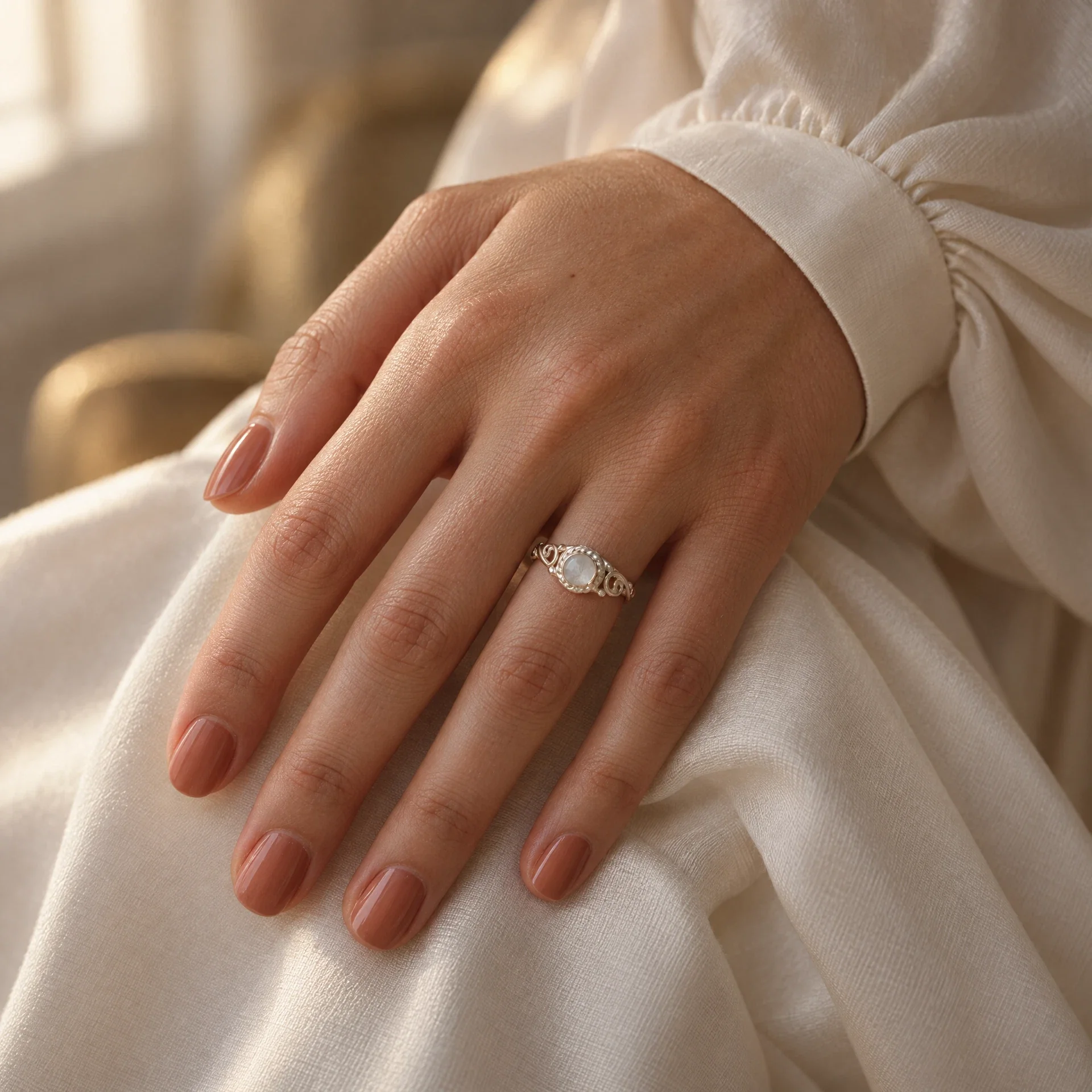
At first glance, milk jewelry and pearl jewelry can look surprisingly similar: both may feature pale, rounded elements with a gentle sheen. The resemblance is visual, not a guarantee of shared materials. A breast-milk keepsake typically incorporates preserved milk into a crafted component, while a genuine pearl forms within a mollusk. Understanding that distinction helps you compare appearance, emotional significance, care requirements, and suitability for the way you actually wear jewelry.
Neither category is automatically the better choice. For one person, milk jewelry marks a particular feeding experience or chapter of parenthood. For another, pearls offer a connection to family traditions without incorporating a personal biological material. You can also appreciate both for different reasons. Start with what you want the piece to represent, then examine what it is made from and how it should be handled.
What milk jewelry and pearls are actually made from
The term milk jewelry generally describes a keepsake made using breast milk that has undergone some form of preservation and incorporation into a jewelry component. Across the wider craft market, resin-based components are common, but methods and formulations vary. The name alone does not tell you the preservation technique, the amount incorporated, the surrounding material, or the finished piece's limitations. Those details require direct confirmation from the maker.
A genuine pearl develops when a mollusk deposits layers of material around an irritant or nucleus. Cultured pearls result from human intervention in that process; natural pearls form without that intervention. Both are different from imitation pearls, which may use glass, plastic, or another core with a surface coating. Freshwater and saltwater describe origins, not a simple ranking in which one category is always superior.
A white, pearl-shaped component in milk jewelry is therefore not necessarily a pearl. Likewise, an imitation pearl does not contain breast milk simply because it has a creamy appearance. If a description uses expressions such as “pearl effect” or “pearl-like,” treat them as appearance language until the material is identified. Ask whether the featured element is a cultured pearl, an imitation pearl, or a separately made keepsake component.
The setting matters too. A pendant's pale centerpiece tells you nothing about the surrounding metal. Sterling silver is at least 925/1000 silver, while gold-filled is not the same as solid gold. Vermeil descriptions have specific FTC conditions in the United States. A hallmark can be useful information, but it is not independent proof of authenticity. Request a clear material description rather than relying only on color, photographs, or a stamp.
When exploring the breast-milk keepsake category, use the page as a starting point for questions, not evidence of a particular construction method. Ask D LOVE JEWELRY to confirm current details about any milk jewelry concept you are considering. The useful distinction is between an aesthetic description and a material specification: “soft white” explains how something looks; a specification explains what you will be wearing.
Appearance and meaning: similar colors, different expectations
Pearls are known for luster: the appearance of light reflecting from and interacting with their layered structure. Their body color and overtones can vary, and surfaces may show natural characteristics. Photographs do not capture every change under different lighting. A pearl that looks bright white against a dark background may appear warmer beside a white shirt, so visual comparisons should account for lighting and surrounding colors.
The appearance of milk jewelry depends on the preserved inclusion, the material surrounding it, and any added decorative elements. It may look creamy, translucent, opaque, or softly shimmering, depending on the construction. Do not assume the same optical depth as a pearl, or an identical result to a reference image. Ask which visual features can be discussed and which remain variable before treating a photograph as an exact expectation.
For example, someone seeking a small pendant that recalls an early feeding chapter may prioritize the personal inclusion over a perfectly uniform finish. In that situation, milk jewelry could fit the intention even if its surface does not resemble a high-luster pearl. Someone wanting earrings that coordinate closely with an existing pearl necklace may instead prioritize pearl type, dimensions, tone, and matching. These are different briefs, not competing measures of sentiment.
The meaning of milk jewelry is also personal rather than universal. Breastfeeding may have been joyful, difficult, brief, prolonged, or mixed with other feeding approaches. A keepsake need not rank those experiences or suggest that one way of feeding defines motherhood. If the subject feels complicated, it is reasonable to choose an ordinary pearl piece, another symbol, or no jewelry at all. An object should support your interpretation, not impose one.
As a gift, milk jewelry calls for a conversation rather than a surprise assumption. The intended wearer may not want to share or preserve personal material, even if the giver's intention is affectionate. Pearls avoid that particular request, though style and comfort still matter. Ask whether a keepsake would be welcome before discussing design details. Leaving someone room to decline is part of making a thoughtful gift.
Choosing milk jewelry or pearls for your actual routine
The best comparison begins with where and when you plan to wear the piece. A pendant worn occasionally to family gatherings faces different conditions from a ring worn during frequent handwashing, cleaning, or exercise. Milk jewelry should be evaluated by its confirmed construction and care instructions, not by the assumption that a smooth surface is tough. Pearls also deserve care; their familiar appearance does not make them maintenance-free.
A setting can reduce some exposure without eliminating every risk. For example, a recessed centerpiece may be less exposed to direct knocks than a high, projecting one, while a pendant generally encounters fewer hard surfaces than a ring. These are design considerations, not durability promises. Check how the element is secured, whether edges are exposed, and whether the overall size suits your clothes, movements, and preferred chain length.
If you are comparing milk jewelry with a pearl option, write a short brief before looking at designs. This keeps emotion and practical constraints in the same conversation. Useful points include:
- Purpose: a private reminder, a visible symbol, or a piece mainly chosen for its appearance.
- Wear pattern: occasional use, office wear, or a routine involving water, exercise, and cleaning products.
- Material clarity: the centerpiece, surrounding metal, coatings, and any additional stones.
- Acceptable variation: how much difference in shade, shape, or surface character you would welcome.
- Future care: written cleaning guidance and what to do if the piece becomes damaged.
For a person who wants one piece for almost every activity, neither pearls nor milk jewelry should be selected without considering removal habits. Another design may suit that routine better, but metal jewelry also has material-specific limits. Browsing everyday jewelry ideas can help clarify preferences without establishing wear guarantees. Decide whether you are comfortable removing a meaningful piece before swimming, cleaning, or other potentially damaging activities.
Budget comparisons need the same specificity. Pearl jewelry can differ substantially by pearl characteristics, matching, setting, and workmanship. A personal keepsake may involve a different set of considerations. Compare complete descriptions rather than treating similar dimensions as equal value. Because the site is a showcase and email-consultation resource, ask D LOVE JEWELRY to confirm current details rather than inferring price, availability, or commission options from an image.
Care, consultation, and a decision you can feel comfortable with
For milk jewelry, obtain written care guidance for the exact finished construction. Do not substitute advice for pearls, ordinary resin objects, or metal-only pieces. Chemicals, fragrance, chlorine, heat, and unsuitable ultrasonic cleaning can harm some jewelry, including organic and resin-based components. Until the materials and instructions are clear, avoid improvised soaking, abrasive polishing, and household cleaning solutions. A method suitable for the setting may still harm its centerpiece.
Pearls require their own cautious approach. Apply fragrance and cosmetics before putting them on, and avoid exposure to cleaners and pool chemicals. Gently wiping with a soft cloth after wear is commonly recommended, but cleaning instructions should account for the setting and whether pearls are strung. The GIA jewelry care guidance provides general context; it does not replace instructions for a particular piece.
Before sending any personal material for milk jewelry, ask for written instructions and applicable local information. Do not guess preparation quantities, packaging requirements, or mailing arrangements from informal advice. First establish whether the proposed work is currently offered and what consent or handling information applies. It is reasonable to pause until you understand the instructions, and you do not need to send anything simply to express an initial interest.
Your consultation can stay focused: What is the featured component made from? Which visual details are variable? What metal surrounds it? What cleaning methods should be avoided? What should you do if it needs attention later? Use the D LOVE JEWELRY contact page to request current information about milk jewelry or a pearl design, rather than assuming the website confirms a service, policy, or available product.
Choose pearls when their organic luster and established material identity best serve your aim. Choose milk jewelry when the personal inclusion is central and its confirmed practical requirements fit your life. If both appeal, there is no need to make one represent every occasion. The most satisfying choice is the one whose meaning, materials, and care you understand—and that you feel free to wear, save, or decline on your own terms.