
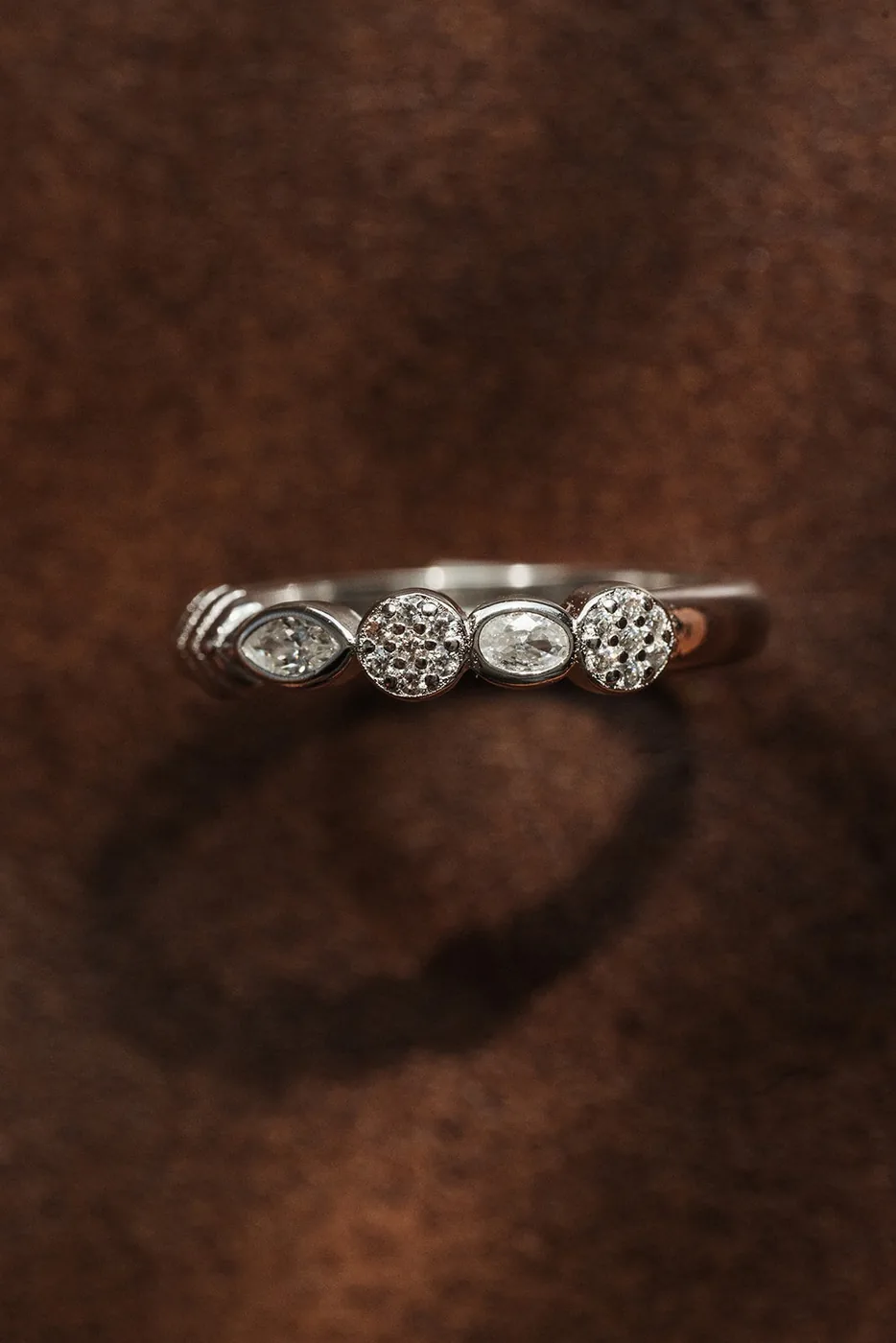
The useful question in 14k vs 18k gold is not which metal is universally better, but which suits the piece you want to wear. A ring exposed to daily knocks has different demands from a pendant worn occasionally. Color, setting construction, skin sensitivity, budget, and any delicate materials in the design all matter alongside gold content.
Start a 14k vs 18k gold comparison with your actual habits rather than an idealized routine. Do you remove jewelry before exercise? Does your work involve tools, lifting, or frequent glove changes? Will the piece be worn alone or against another ring? These details help you decide whether extra gold content offers something you value, or whether another priority deserves more weight.
14k vs 18k gold: What the numbers actually tell you
Karat describes the proportion of gold in a gold alloy, using a scale of 24 parts. Fourteen-karat gold contains 14 parts gold out of 24, approximately 58.3 percent; eighteen-karat contains 18 parts, or 75 percent. The remaining proportion consists of other metals. Those metals influence color, hardness, and working properties, but the karat number does not identify the complete alloy recipe.
That distinction matters in 14k vs 18k gold because purity is only one variable. Two pieces with the same karat can behave differently because their alloy composition, construction, dimensions, and metal treatment differ. A substantial 18k band can be a more sensible daily choice than a very thin 14k band. Compare actual designs rather than assuming the lower karat automatically makes every piece stronger.
Generally, 14k gold offers a practical balance between gold content and resistance to wear, while 18k gold offers a higher gold proportion and often a richer yellow appearance. Neither is scratchproof. Hardness, resistance to bending, and long-term wear are related but not identical properties. A surface may show fine scratches without the piece being structurally compromised; a bent prong presents a different concern.
For yellow jewelry, 14k vs 18k gold often becomes a visible color decision. Eighteen-karat yellow gold commonly looks deeper and warmer, while fourteen-karat can appear lighter. However, alloy choices and surface finishes change the effect. View comparable pieces in neutral daylight if possible, and compare polished surfaces with polished surfaces rather than judging a matte piece against a highly reflective one.
White and rose gold require a different reading of 14k vs 18k gold. White gold may have rhodium plating, so the visible color can reflect the coating rather than the underlying alloy. Rose gold color depends partly on copper content, not simply on karat. Ask whether a finish is plated, how it may change with wear, and what maintenance would be appropriate for that particular piece.
Also confirm whether the description means solid gold throughout the metal component, rather than gold plating or gold-filled construction. Gold-filled is not the same as solid gold. Marks such as 14K, 18K, 585, or 750 can be useful clues, but a hallmark alone is not proof of authenticity. Request a clear materials description and supporting documentation where relevant, especially for mixed-material jewelry.
Match the choice to contact, friction, and daily routines
For a frequently worn ring, 14k vs 18k gold should begin with exposure. Hands encounter door handles, bags, countertops, and other hard surfaces throughout the day. Fourteen-karat is often a practical starting point, but width, thickness, and setting structure remain essential. A delicate ring in either karat may be unsuitable for heavy manual tasks, even if it feels comfortable during ordinary desk work.
Consider two examples: a low-set band worn on a commute and a tall stone ring worn for dinners. The first may encounter more repeated friction despite looking simpler. The second may catch on fabric or receive leverage from a knock to its setting. Neither example has a universal karat answer. The location and shape of vulnerable parts can matter more than the overall weight of gold.
For earrings and pendants, 14k vs 18k gold may lean more toward appearance because these pieces typically receive less direct impact than rings. An 18k yellow pendant can make sense when a warm color is the main goal. Still, pendant loops, clasps, earring posts, and chain links experience stress. Ask about the complete assembly rather than evaluating only the most visible decorative element.
Bracelets bring another set of tradeoffs to 14k vs 18k gold. A bracelet can rub against a desk, slide beside a watch, or catch on a sleeve. Solid-looking links may be hollow, and a slim clasp can become the limiting component. For example, a carefully constructed 18k bracelet worn occasionally may suit someone better than a lightweight 14k design expected to withstand constant contact.
Skin sensitivity adds uncertainty to 14k vs 18k gold rather than providing a simple rule. Higher gold content does not establish that a piece will be suitable for everyone, because the other metals and any plating still matter. If you have a known sensitivity, ask for the alloy information that is available and seek appropriate professional advice. Do not treat either karat as an allergy guarantee.
Use the everyday jewelry showcase to think about the forms you prefer, then separate visual appeal from wear expectations. A practical habit is to remove jewelry before activities involving impact, strong gripping, or abrasive contact. If you know you rarely remove rings, explain that honestly during a consultation. The right recommendation depends on how you live, not just how you hope to wear it.
Let construction and material combinations guide the design
In settings with stones, 14k vs 18k gold is partly a construction question. Prong thickness, stone height, supporting structure, and exposed edges affect how a setting handles wear. More metal is not always visually desirable, but extremely fine details leave less margin for deformation. Ask whether the setting proportions are appropriate for your intended use and what signs would justify an inspection.
A useful 14k vs 18k gold comparison keeps the designs as similar as possible. Compare similar dimensions, stone sizes, and finishes before drawing conclusions about weight or price. Eighteen-karat contains more gold per unit of alloy weight, which can contribute to a higher material cost. However, labor, gemstones, construction, and design also affect the total; karat alone cannot explain a quoted amount.
Surface design changes how 14k vs 18k gold looks after use. A mirror-polished band makes small marks easy to see, while a textured finish may disguise some marks yet wear smoother at raised points. Neither finish prevents wear. Engraving, thin edges, and decorative relief also deserve attention if future refinishing is likely, since polishing removes some metal and may soften fine details over time.
For keepsakes, 14k vs 18k gold must be considered alongside the material held within the piece. A gold component does not make an organic or resin-based element resistant to heat, solvents, or water exposure. The most sensitive component should guide care. Ask for written guidance covering the assembled piece, rather than relying on general advice for a plain gold ring or chain.
If you are considering a cremation keepsake consultation or exploring breast-milk keepsake information, take the time you need. Confirm the materials, intended wear, and applicable care limitations. Before sending anything, obtain written instructions and check relevant local information. Do not infer preparation requirements or transport arrangements from general jewelry advice; those details need specific confirmation.
Choose with a realistic care plan and clear questions
A responsible 14k vs 18k gold decision includes maintenance you can realistically follow. Keep jewelry away from household chemicals, chlorine, and fragrance, and avoid unnecessary heat. These exposures can harm alloys, finishes, stones, pearls, or other components. Removing a piece before swimming or cleaning is more reliable than expecting a particular karat to tolerate every environment without consequence.
Cleaning does not produce a universal winner in 14k vs 18k gold. For a suitable plain gold piece, mild soap, lukewarm water, and a soft cloth may be appropriate, but confirm the instructions first when stones, coatings, adhesives, or keepsake materials are involved. Do not soak a mixed-material piece by default. Avoid ultrasonic cleaning unless suitability has been confirmed for the entire assembled item.
Storage also belongs in a 14k vs 18k gold comparison because contact damage can happen off the body. Store pieces separately so chains do not tangle and harder stones do not rub against softer surfaces. Check clasps and visible settings periodically without pulling or bending them to test strength. Stop wearing a piece if a stone moves, a prong catches unexpectedly, or a link appears distorted.
Before deciding on 14k vs 18k gold, write a short brief: the type of piece, weekly wear frequency, preferred color, likely contact with hard surfaces, and any materials that need special care. Then ask about alloy details, dimensions, plating, and maintenance. If you want to discuss a design with D LOVE JEWELRY, use the email consultation contact page and ask for confirmation of current materials and relevant details.
The best choice is the one whose tradeoffs you understand. Fourteen-karat may be a sensible option when frequent wear and a lighter yellow tone align with your priorities. Eighteen-karat may appeal when higher gold content and a warmer appearance matter more. In either case, appropriate construction, thoughtful removal habits, and care suited to every component will do more than the karat number alone.