
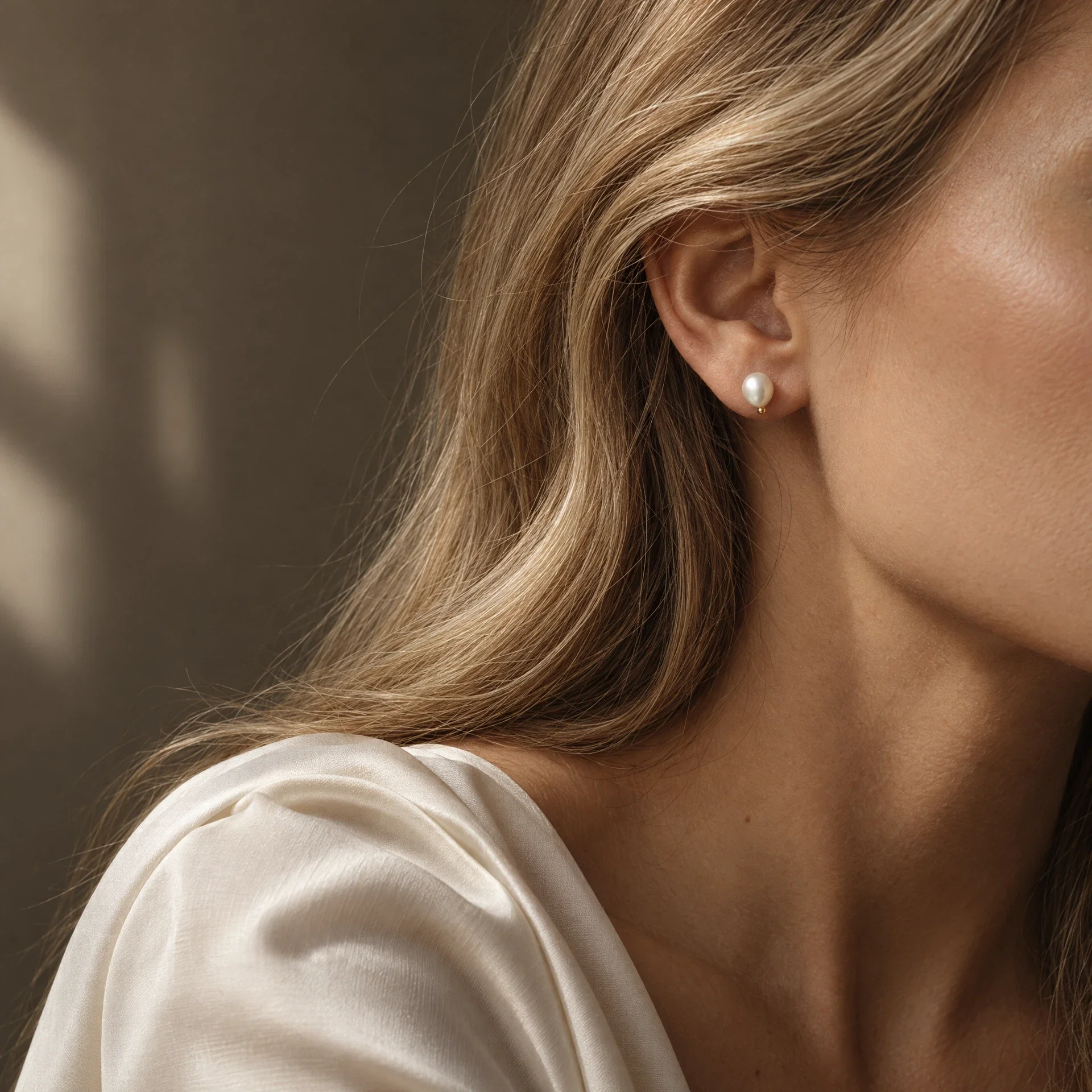
Freshwater pearls can look remarkably different even when they share a similar size and color description. One may show a crisp reflection and a nearly round outline; another may have a soft glow, an elongated shape, or ripples across its surface. These differences are not automatically defects. They reflect how a pearl developed, any treatments it received, and how it was selected and assembled into jewelry. Understanding them helps you choose deliberately rather than treating roundness or a smooth photograph as the only signs of quality.
Most freshwater pearls offered in jewelry are cultured, meaning people initiate pearl formation within a living mollusk. Cultured does not mean imitation. However, the word alone does not tell you the pearl's shape, internal construction, treatment history, or suitability for a particular setting. Those details deserve separate questions.
How formation creates individual character
A pearl forms as a mollusk deposits nacre, the layered material responsible for its characteristic glow. Culturing methods, the host mollusk, growing conditions, and time all influence the result. Many freshwater pearls are tissue-nucleated and consist largely of nacre, but bead-nucleated examples also exist. It is therefore misleading to assume that every freshwater cultured pearl has the same internal structure or that every example is entirely nacre.
As growth proceeds, the developing pearl does not follow a factory specification. Variations in deposition can produce round, oval, button, drop, or irregular baroque forms. Freshwater pearls with similar outlines can still differ in symmetry: an oval may be balanced along its length, while another narrows noticeably toward one end. For earrings, that distinction may matter more than whether the pair meets a particular shape label.
Surface character also develops during growth. Small pits, ridges, rings, and changes in texture are common features, although their number and visibility vary. A minor mark near a drill hole may disappear within a finished design. The same mark on the front of a pendant may remain prominent. Judge the pearl as it will be worn, not solely as a loose object viewed from every angle.
When comparing freshwater pearls, separate individuality from damage. A growth ring or natural indentation is different from a crack, chipped drill hole, or peeling surface. Ask for close photographs of any questionable area and an explanation of what it represents. An appealing irregular shape does not cancel out a structural concern, especially where a pearl connects to a post, pin, or clasp.
For example, a softly ridged drop can make an expressive pendant, while evenly shaped buttons may sit neatly against the ear. Neither choice is inherently superior. The useful question is whether the pearl's character supports the design. With freshwater pearls, accepting organic variation can widen your options, but it should never replace checking sound construction.
Read luster, color, and surface together
Luster describes how light reflects from a pearl's surface and interacts with its nacre. Strong luster often produces bright, relatively defined reflections; weaker luster can appear diffuse or chalky. Shape complicates the comparison because curved and uneven surfaces distort reflections. Compare freshwater pearls under the same lighting and, where possible, at similar sizes rather than judging one studio image against another taken outdoors.
A practical inspection is to look for both brightness and definition. Can you distinguish the outline of a reflected window or light source, or does it dissolve into a broad haze? This is not a formal grading test, and photographs can exaggerate contrast. Still, it gives you a more useful starting point than descriptions such as 'radiant' or 'premium,' which do not establish measurable differences.
Color has several components: a main body color, possible overtones, and sometimes shifting iridescence across the surface. White freshwater pearls may lean warm, cool, pinkish, or creamy. Naturally occurring pastel shades can include pink, peach, and lavender tones, but color alone does not establish whether a pearl is untreated. Dyeing and other treatments can change appearance, so request disclosure rather than guessing from a photograph.
Think about color against the wearer, not simply against a white background. A cool-toned pearl may look distinct beside warm yellow metal, while a cream-colored pearl may create a gentler transition. As an example, compare two loose pearls beside the intended metal and a familiar piece of clothing. Screen settings and indoor bulbs can shift perceived color, making written descriptions and additional photographs worthwhile.
Surface quality and luster should be considered together. A very smooth pearl with dull reflections may look less lively than one with a few unobtrusive marks and strong light return. Freshwater pearls do not need to be visually flawless to be attractive. Decide which characteristic you notice first at normal viewing distance, then inspect closely for condition and construction concerns.
Letter grades are less useful than many buyers expect because pearl grading systems are not universally standardized across sellers. An 'AAA' description may mean something different elsewhere. When reviewing freshwater pearls, ask what the grade covers: luster, surface, shape, matching, or a combination. Specific descriptions and clear images provide a stronger basis for comparison than a grade with no explanation.
Choose for the design and the way you wear it
Size influences presence, weight, and the demands placed on a setting. A larger pearl may make a pendant feel more substantial, but it is not necessarily better suited to daily wear. For freshwater pearls, ask how the measurement was taken, particularly with drops and baroque shapes. Maximum length alone can disguise a narrow profile; width and depth help explain the actual visual volume.
Matching also depends on the design. In a stud pair, differences in size, body color, and luster may be noticeable because the pearls occupy corresponding positions. A deliberately varied necklace can accommodate greater contrast. For example, a graduated strand should change size intentionally rather than appearing randomly uneven. A mixed-shape arrangement should look balanced even when its individual pearls are visibly different.
Perfectly matching freshwater pearls may require more selective sorting, but close matching is not the right goal for every wearer. A slightly asymmetric pair can feel natural and expressive. Before deciding, ask to see both pearls together, facing the same direction, in one image. Separate close-ups can conceal differences in scale and color that become obvious when the pair is side by side.
Construction deserves as much attention as appearance. Check whether a pendant uses a securely supported attachment, whether an earring's pearl sits evenly, and whether adjacent metal edges could rub the surface. For strands, ask about the stringing material, knots, clasp, and recommended inspection schedule. Knots can help limit pearl-to-pearl contact and loss if a strand breaks, but they do not make stringing maintenance-free.
Freshwater pearls are relatively soft compared with many gemstone materials, so exposed rings and wrist pieces usually face more knocks and abrasion than earrings or pendants. Someone who works extensively with their hands may prefer a less exposed design. The site's everyday jewelry overview can help frame a discussion about wearing habits, but any specific design's materials and care requirements should be confirmed.
Use the collection showcase to consider proportions and styling rather than assuming current inventory or purchase options. If a design interests you, ask D LOVE JEWELRY to confirm its current details. For freshwater pearls, useful questions include the stated size range, treatment disclosure, metal description, attachment method, and whether representative images show the actual piece under discussion.
Care for the pearl and evaluate the whole piece
Good care begins with recognizing that a pearl and its mounting may have different vulnerabilities. Freshwater pearls can be harmed by harsh chemicals, fragrance, chlorine, excessive heat, and abrasive contact. Put pearl jewelry on after applying cosmetics and fragrance, and remove it before swimming, showering, strenuous exercise, or tasks involving cleaning products. Let applied products dry before the jewelry touches your skin.
After wear, gently wipe pearls with a clean, soft cloth to remove surface residue. If more cleaning is necessary, first obtain instructions appropriate to the complete piece. A lightly dampened cloth may be suitable in some cases, but soaking can affect stringing or attachments. Avoid steam cleaners and ultrasonic cleaning for pearl jewelry; methods suitable for an unadorned metal piece may damage pearls or their construction.
Store freshwater pearls separately from harder jewelry in a soft-lined space where clasps and gemstones cannot scratch them. Do not leave them in strong sunlight, near heat sources, or loose at the bottom of a bag. Allow a damp strand to dry naturally before storage, without pulling or stretching it. Inspect thread and connection points periodically, especially if the piece is worn frequently.
The surrounding metal matters too. Gold-filled is not solid gold, sterling silver contains at least 925 parts silver per thousand, and U.S. vermeil descriptions have specific conditions. A stamp can be informative but is not proof of authenticity on its own. Ask for a written material description, and do not assume a metal-cleaning product is safe for freshwater pearls attached to it.
Before making a decision, note three priorities: the appearance you prefer, the wear conditions you expect, and the information still missing. A buyer seeking discreet earrings might prioritize balanced size and color; someone choosing a sculptural pendant might prioritize shape and luster. If details are unclear, use the D LOVE JEWELRY consultation contact page to request confirmation rather than filling gaps with assumptions.
The most useful way to compare freshwater pearls is to look beyond a single quality label. Consider light reflection, shape, visible condition, treatment disclosure, and the suitability of the finished construction together. Choose the differences you enjoy, understand the compromises you are accepting, and keep care simple and cautious. Individuality is part of a pearl's appeal; clear information makes that individuality easier to appreciate.