
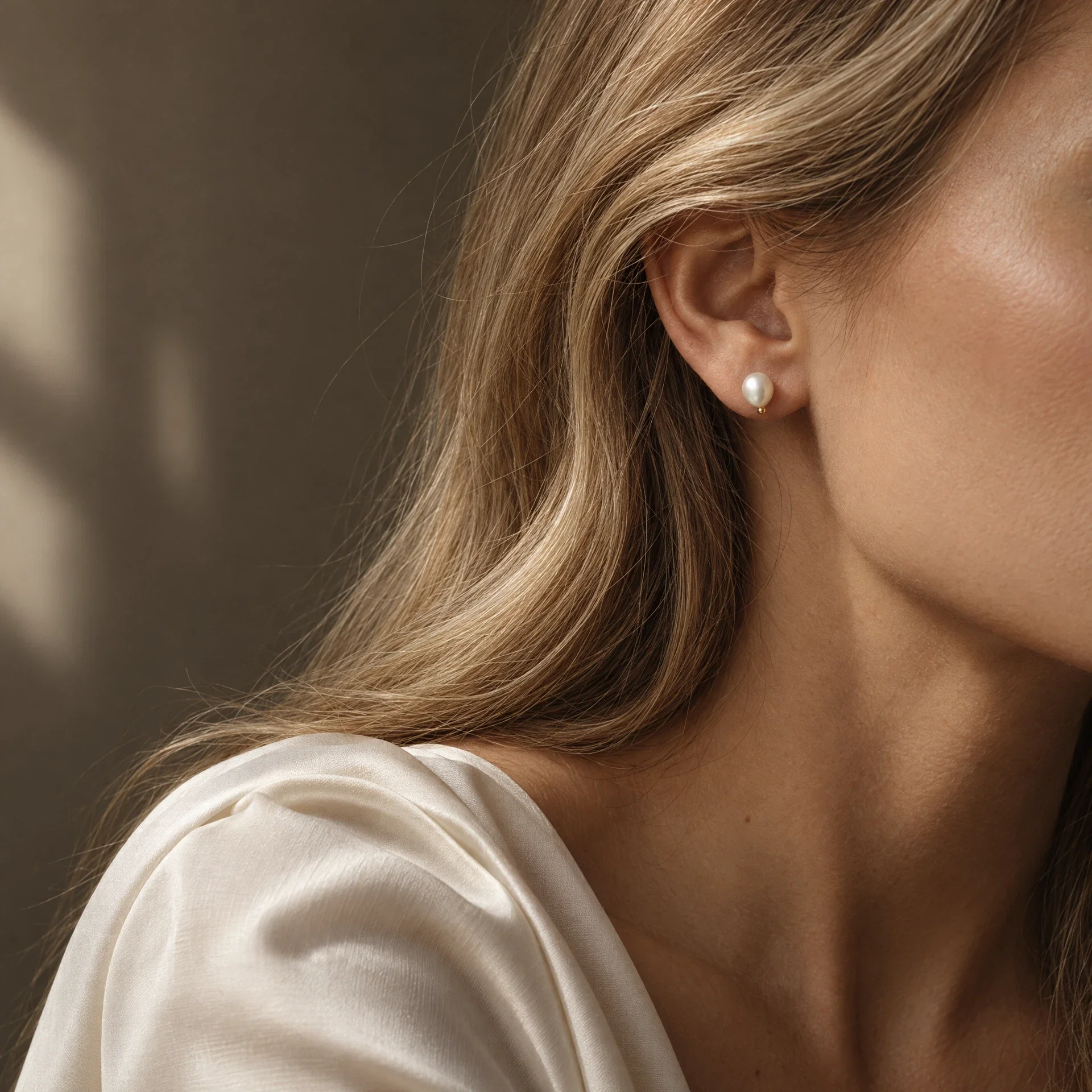
Good pearl jewelry care starts with restraint: remove surface residue without soaking the piece, scrubbing the nacre, or exposing hidden components to unnecessary moisture. For most intact pearl jewelry, a soft cloth and a little lukewarm water are the safest starting point. Before cleaning, check whether the pearls are strung, drilled onto posts, glued into settings, or combined with other materials.
This guide to pearl jewelry care focuses on gentle home maintenance, not restoration. Freshwater and saltwater cultured pearls both need caution, while imitation pearls may have coatings that require different instructions. If you cannot identify the material or construction, begin with a dry wipe and ask for specific guidance before using water or detergent.
Inspect the Piece Before Choosing a Cleaning Method
The first decision in pearl jewelry care is whether the piece is sound enough to clean. Work over a towel on a clear surface, away from an open sink drain. Look for loose pearls, missing knots, stretched thread, peeling surfaces, or a clasp that no longer closes securely. Do not tug on a strand to test its strength; visible gaps and frayed fibers are enough reason to stop.
Construction matters as much as the pearl itself in pearl jewelry care. A knotted necklace may contain silk or another thread that absorbs water. A pearl stud may have adhesive beneath the pearl, even if the post looks firmly attached. A pendant might combine a pearl with a delicate stone or a treated metal surface. The least water-tolerant component should set the cleaning limit.
For example, an intact pearl pendant on a plain metal chain may only need its pearl wiped with a barely damp cloth. A vintage necklace with discolored knots and an uncertain repair history needs a more conservative approach. Age alone does not determine condition, but unknown adhesives, weakened thread, and previous treatments make a full wash harder to judge safely.
Another part of pearl jewelry care is distinguishing dirt from damage. Skin oils can leave a dull film, but flaking, chalky patches, deep scratches, and exposed layers are not ordinary grime. More pressure will not repair them. If a mark stays after one gentle wipe, avoid repeated rubbing or stronger solutions. Take a clear photograph and seek an assessment instead.
- Dry wipe only: choose this for uncertain coatings, loose settings, damaged surfaces, or unknown construction.
- Barely damp wipe: use this for intact pearls with light everyday residue and no known moisture restrictions.
- Ask before cleaning further: do this for persistent staining, damaged thread, combined materials, or valuable and sentimental pieces with an unclear care history.
Keep pearl jewelry care separate from polishing the surrounding metal. Silver polish, treated polishing cloths, and metal-cleaning dips can contact the pearl or lodge around its setting. Even a mark indicating metal fineness does not tell you whether a cleaning product is safe for the entire piece. For construction questions about a D LOVE JEWELRY design, use the email consultation contact page and ask for current material-specific instructions.
Use a Controlled, Minimal-Moisture Routine
Prepare two clean, soft, lint-free cloths, a small bowl of lukewarm water, and a dry towel. Pearl jewelry care does not require a specialty chemical kit for a routine wipe. Choose a smooth cloth without abrasive fibers, embedded grit, or polishing compounds. Avoid paper towels, rough washcloths, and brushes, especially near drill holes and knots where friction can damage surfaces or catch thread.
- Remove loose residue first. Gently wipe the piece with the dry cloth. Support a necklace along its length rather than letting it dangle from one end. Hold earrings by their metal components without twisting the pearl.
- Dampen, then wring thoroughly. Wet a corner of the second cloth with lukewarm water and squeeze it until it feels barely damp. It should not drip when pressed. Wipe each pearl lightly, keeping moisture away from knots, drill holes, and glued joints as much as practical.
- Use detergent only when justified. For pearl jewelry care involving a persistent oily film, a very small amount of mild soap diluted in water may help, but only if the maker's instructions permit it. Avoid products containing bleach, ammonia, acids, abrasives, or added fragrance. When ingredients or compatibility are uncertain, skip the soap.
- Remove any soap residue. Use a fresh cloth area lightly dampened with plain water. Do not rinse the whole piece under a running tap. Follow with a gentle blot using the dry cloth rather than rubbing back and forth.
- Lay the piece flat to dry. Place it on a clean, dry towel in a shaded, ventilated room. Keep necklaces supported and clasps open if doing so does not strain the strand. Do not wear or put away the piece while any part remains damp.
Minimal water is central to pearl jewelry care because the visible pearl is not the only concern. Wet thread can stretch or weaken, and moisture may enter spaces that cannot be dried with a cloth. There is no single drying time that suits every strand: room humidity, thread type, and the amount of water used all matter. If knots became wet, allow thorough flat drying before handling the necklace normally.
For routine pearl jewelry care, never substitute soaking, steam, or ultrasonic cleaning for this controlled wipe. Heat and unsuitable ultrasonic treatment can harm pearls and vulnerable settings. The GIA jewelry care guidance provides broader precautions for cleaning jewelry. If the piece remains dirty after this restrained routine, further treatment should depend on its materials rather than on a stronger household recipe.
Avoid Shortcuts That Create Bigger Problems
Household cleaning mixtures are a poor fit for pearl jewelry care. Vinegar and lemon juice are acidic, while baking soda, toothpaste, and abrasive powders can scratch surfaces. Alcohol-based products and harsh cleaners may affect finishes or adhesives. A recipe described as natural is not necessarily gentle: compatibility depends on the chemistry and construction of the piece, not the product's marketing language.
Fragrance, sunscreen, cosmetics, and hair products complicate pearl jewelry care because they can leave residue or expose pearls to unsuitable ingredients. Apply these products before putting jewelry on, and let them dry first. Remove pearls before swimming, bathing, exercise, and household cleaning. Chlorinated water, perspiration, cleaning sprays, and accidental knocks are easier to prevent than to correct after repeated exposure.
If lotion gets onto a pearl earring, blot and lightly wipe the surface rather than immersing the earring to clean beneath the pearl. If a necklace is exposed to pool water, avoid adding another chemical to neutralize it. Remove it, blot gently, and seek prompt material-specific advice if moisture entered the thread or settings. Neither example calls for forceful scrubbing.
Mixed-material pearl jewelry care requires particular restraint. A pearl paired with resin, an organic keepsake element, or a delicate gem should not automatically receive even the same damp wipe used on a plain pearl strand. If you are considering a design shown among everyday jewelry ideas, ask which parts can tolerate moisture and whether the piece has separate cleaning instructions for different components.
Do not try to brighten an aging pearl with oil, wax, nail polish, or a clear household coating. These can change its appearance, collect dirt, or make later assessment more difficult. A pearl's luster comes from its surface and layered structure; cleaning can remove a film but cannot rebuild worn nacre. Accepting that limit prevents a small cosmetic concern from becoming irreversible damage.
A useful boundary for pearl jewelry care is this: stop when cleaning requires scraping, leverage, prolonged wetting, or repeated chemical experiments. Likewise, leave tarnish immediately beside a pearl alone if you cannot clean the metal without touching the pearl. Independent metal cleaning or repair may be possible, but the method should be chosen by someone who can inspect the actual setting.
Build a Simple Wearing and Storage Habit
Consistent pearl jewelry care is more effective than occasional intensive cleaning. After wearing, give accessible pearl surfaces a gentle dry wipe to remove fresh residue. Use the damp routine only when needed, not automatically after every outing. An unworn piece kept clean and protected does not need washing simply because a calendar interval has passed.
Store pearls separately from harder stones, exposed chains, and sharp earring posts. A soft-lined compartment or clean fabric pouch can limit rubbing, but avoid cramming several pieces together. Lay strands flat rather than hanging them under their own weight. Keep storage away from direct sun, radiators, hot cars, and persistently damp rooms; stable, ordinary indoor conditions are preferable to extremes.
Thread checks belong in pearl jewelry care alongside surface cleaning. Before wearing a necklace, inspect the knots, clasp, and areas near the ends for fraying or unwanted gaps. Restringing needs depend on wear and condition, so do not rely on a universal annual schedule. If a strand stretches, feels unreliable, or shows damaged thread, stop wearing it until it has been assessed.
When browsing the jewelry collections showcase, consider how a design fits your habits rather than assuming all pearl pieces require identical upkeep. Someone who frequently uses hand lotion may find a ring harder to keep clean than earrings, for example. Ask D LOVE JEWELRY to confirm materials, construction, and any available care guidance for the particular design before deciding.
Keep a short pearl jewelry care note with any instructions you receive: whether a damp cloth is permitted, which components need to stay dry, and what changes should trigger an assessment. This is especially useful for inherited jewelry or pieces worn only occasionally, where construction details are easy to forget. Record uncertainty rather than filling the gaps with a generic cleaner recommendation.
The most dependable pearl jewelry care routine remains modest: inspect, wipe gently, use minimal moisture only when appropriate, dry flat, and protect the piece between wears. When something looks damaged or its materials are uncertain, pause. A little residue can often wait for informed advice; a weakened strand or altered pearl surface deserves caution before another cleaning attempt.