
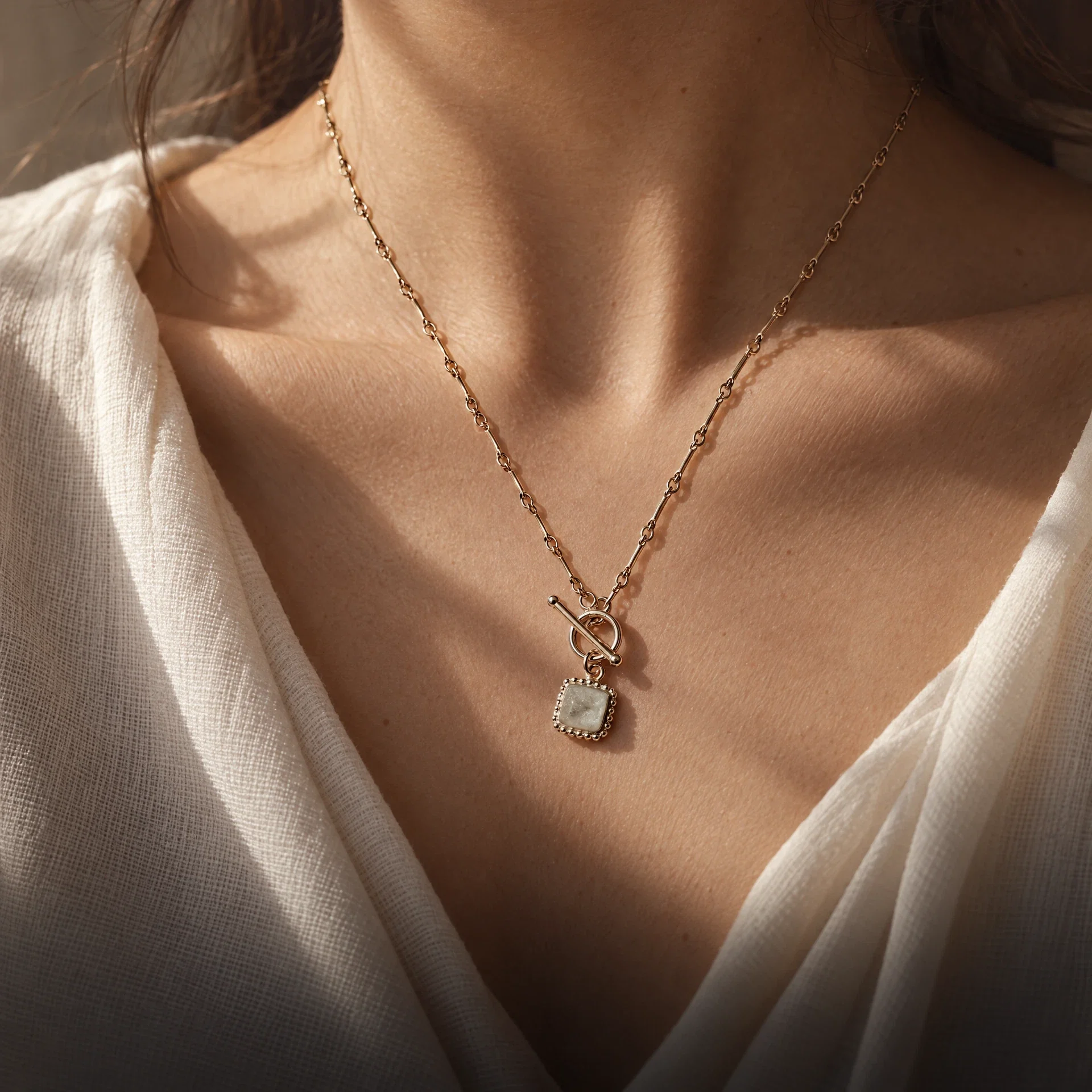
Choosing minimalist memorial jewelry can be a way to carry a private connection without making that connection visible to everyone around you. A small pendant, plain band, or understated charm may look ordinary while holding a meaning that belongs only to its wearer. The most useful starting point is not a particular shape or material, but a question: how much of this memory do you want the jewelry to reveal?
There is no obligation to wear a memorial piece daily, explain it to others, or choose one immediately. For some people, minimalist memorial jewelry becomes part of an everyday routine; for others, it stays in a jewelry box and comes out on meaningful dates. Both approaches are valid. A good decision leaves room for your relationship with the piece to change over time.
Give minimalist memorial jewelry a private language
Discretion has several layers. A design can be visually quiet, its inscription can be hidden, and its meaning can remain unexplained. These are different choices. A tiny heart may be subtle in size but recognizable as a sentimental symbol. A simple bar may attract less attention, yet a visible name or date can invite questions you would rather not answer.
Before comparing minimalist memorial jewelry designs, decide which kind of privacy matters most. If you want the object to blend into your wardrobe, focus on scale and silhouette. If you want the memorial meaning concealed, consider a symbol that looks decorative to others. If written details feel important, ask whether an inward-facing or reverse-side inscription is possible, without assuming any particular design can accommodate it.
For example, someone remembering a parent who loved gardening might choose a small leaf outline rather than a name. Another person might prefer a plain circular pendant associated with a shared walk, a wedding band, or an inside joke. These are illustrative possibilities, not D LOVE JEWELRY product descriptions. The symbolism only needs to make sense to the person choosing it.
A useful test for minimalist memorial jewelry is to imagine being asked about it during an ordinary workday. Would you feel comfortable saying, “It has personal meaning,” and leaving the conversation there? If even that feels too exposed, a piece worn beneath clothing or reserved for private moments may be a better fit. Visibility is adjustable; your memory does not become less significant when it stays unseen.
Minimalist memorial jewelry also benefits from restraint in the number of details. A date, initial, symbol, and quotation may each matter, but combining them can make a small surface crowded or difficult to read. Choose one central element first. Keep other memories in a letter, photograph, or separate object rather than asking one piece of jewelry to represent everything.
Choose a form that fits ordinary life
The right form depends on your habits, not just your preferred appearance. Think about clothing necklines, hand use, workplace requirements, and whether you already wear jewelry. A pendant may sit discreetly beneath a shirt, but it can shift against the skin. A ring stays easy to see, while its underside is exposed to frequent contact with objects.
For minimalist memorial jewelry, check dimensions rather than relying on the word “small.” Ask about pendant height, width, thickness, overall weight, chain length, and clasp type where relevant. A compact but thick piece may feel more noticeable than a slightly wider, flatter one. Photographs alone rarely communicate how a piece rests against a collarbone or moves beneath a sleeve.
Consider these practical comparisons before settling on a format:
- Pendant: Can be concealed beneath clothing, but chain length and neckline determine visibility.
- Ring: Offers an accessible visual reminder, but sizing and frequent hand contact deserve attention.
- Bracelet: May be easy to touch, yet can catch on sleeves or meet desk surfaces repeatedly.
- Small charm: Can suit an existing jewelry habit, provided the attachment is compatible and secure.
Comfort matters more than making minimalist memorial jewelry seem permanently wearable. If your routine includes sports, machinery, frequent water exposure, or tasks that could catch jewelry, plan for removal when appropriate. Think about where the piece will rest during those times. A consistent, protected place is more useful than an expectation that you must never take it off.
Material descriptions deserve equal attention. Sterling silver is at least 925/1000 silver; gold-filled is not solid gold. Vermeil descriptions have specific FTC conditions, so ask for the underlying metal and the stated gold characteristics rather than relying on a color name. A hallmark may provide information, but it is not, by itself, proof of authenticity or a complete account of construction.
When comparing materials for minimalist memorial jewelry, distinguish appearance from maintenance. A finish you enjoy may require care you do not want to perform. Ask about the full composition, coatings, and material-specific precautions, especially if you have known sensitivities. No general metal label can guarantee an individual reaction. D LOVE JEWELRY should confirm the current details of any piece you are considering.
The everyday jewelry overview can help frame questions about wearability, while the collection showcase offers a starting point for discussing visual preferences. Treat the site as a showcase and consultation resource, not confirmation of inventory, pricing, or purchasing arrangements. Save the design references you like and ask which details can currently be confirmed.
Decide whether the piece needs a physical keepsake
A memorial does not need to contain anything to be meaningful. An association, inscription, or chosen shape can carry the connection on its own. This distinction is important when considering minimalist memorial jewelry: a symbolic design and a piece incorporating cremation material involve different decisions, even when their outward appearance is similarly understated.
If you are considering cremation material, begin with consent, personal comfort, and any relevant family responsibilities. Decide whether incorporating a physical keepsake feels right before discussing visual details. You may prefer to keep all material together, or you may not be ready to make a decision. Neither choice requires justification, and a symbolic piece remains a complete option rather than a lesser substitute.
Before discussing minimalist memorial jewelry that incorporates material, use the cremation keepsake information to orient your questions, then obtain written confirmation of the current options and requirements. Ask how any material would be received, identified, handled, and accounted for, including what happens to unused material. Do not send anything until you have written instructions and have checked applicable local information.
The construction deserves careful questions as well. Is the design intended to contain material, incorporate it within another substance, or simply represent the memory? What parts would need special care? Would a change to the chain, clasp, or setting affect the keepsake element? These are questions to clarify, not assumptions about D LOVE JEWELRY’s methods or services.
With minimalist memorial jewelry, a smaller scale can create tradeoffs between concealed details, readable inscriptions, and space for a keepsake element. Ask for actual dimensions and an explanation of what can be achieved in the proposed design. Avoid assuming that a very small piece can hold every requested feature or that adding more elements will preserve the same quiet appearance.
When minimalist memorial jewelry is intended as a gift, the recipient’s preferences should lead the decision. A surprise can unintentionally require someone to wear a symbol they did not choose or discuss a loss before they want to. You might offer to help explore options instead. Avoid requesting personal material, choosing an inscription, or arranging a keepsake without clear permission.
Plan for care, consultation, and changing needs
A care routine should follow the specific construction, not the fact that the piece is sentimental. Chemicals, fragrance, chlorine, heat, and unsuitable ultrasonic cleaning can harm some jewelry, including pearls, delicate gems, and organic or resin-based elements. Do not assume a cleaning method suitable for a plain metal chain is also suitable for the pendant attached to it.
For minimalist memorial jewelry, request written care guidance that addresses every component, including coatings, stones, closures, and any incorporated material. Until you have appropriate instructions, avoid improvised soaking, polishing compounds, and cleaning machines. The GIA jewelry care guidance provides general context, but it cannot replace advice specific to a particular piece.
Build removal into the routine rather than treating it as neglect. Keep pieces separated to reduce rubbing, and choose a protected place away from harsh conditions. If something looks loose, damaged, or different, stop wearing it and ask for assessment before attempting a repair. Do not assume that a memorial component can tolerate the same repair procedures as ordinary metal jewelry.
Before an email consultation about minimalist memorial jewelry, write down your priorities in order: privacy, symbolism, comfort, material preferences, and any keepsake considerations. Include questions about dimensions, inscription possibilities, care, and current arrangements. Through the D LOVE JEWELRY contact page, ask the brand to confirm those details rather than treating an illustrative description as a promise.
Finally, allow minimalist memorial jewelry to have a flexible place in your life. You may wear it often, keep it nearby without wearing it, or return to it after a long pause. The strongest choice is not necessarily the most elaborate or permanent-looking one. It is the piece whose meaning, visibility, and practical demands feel manageable to you now.