
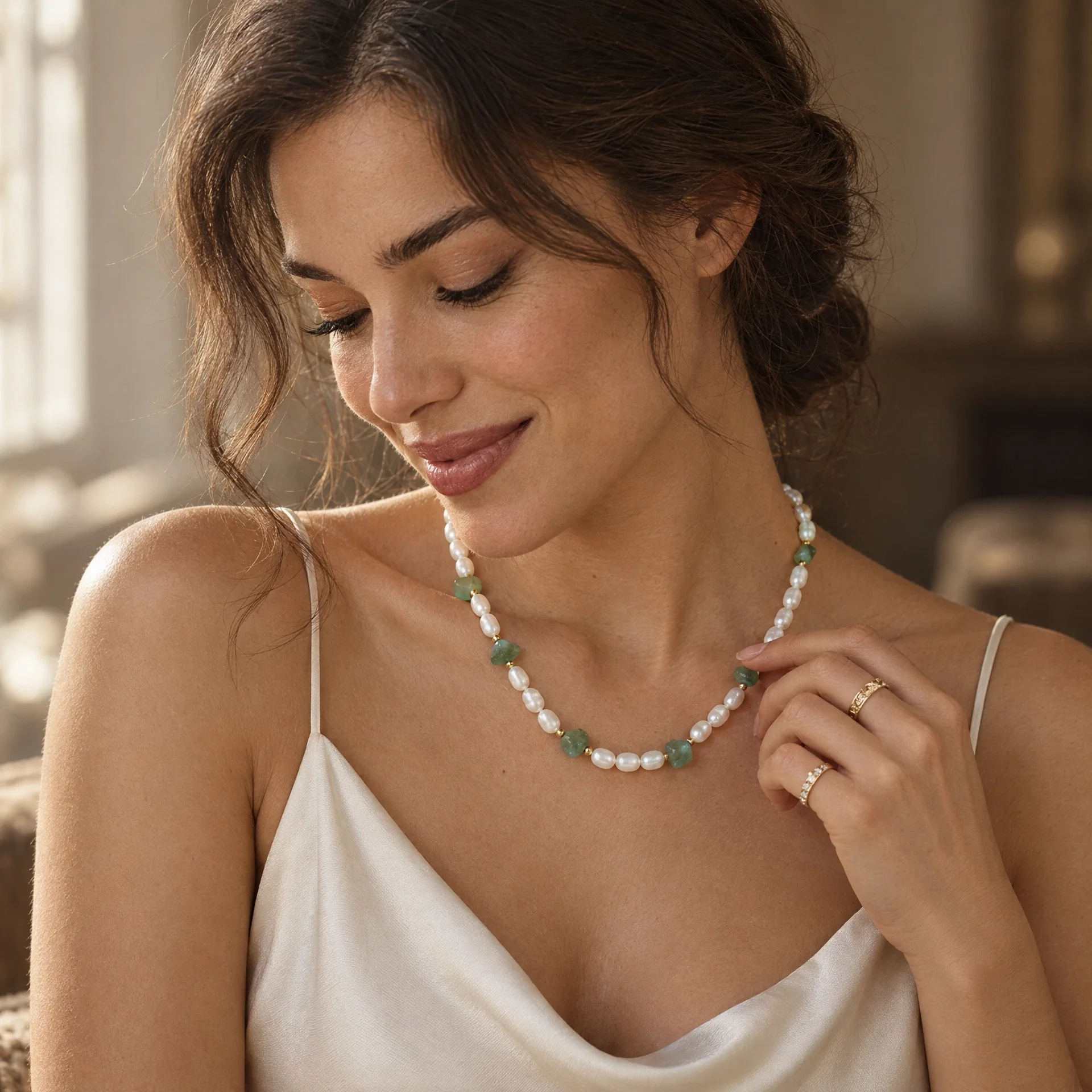
Strong wholesale jewelry partnerships begin with clear questions, not an attractive assortment alone. A retailer needs to understand what customers will receive, how products can be described, which costs affect profitability, and who handles problems after a sale. A supplier needs an equally realistic picture of the retailer’s audience, sales channels, and expectations. The aim is not to find a perfect promise; it is to identify a workable relationship with limits both sides understand.
This guide treats wholesale jewelry partnerships as a due-diligence conversation rather than an assumption that any brand offers established trade terms. D LOVE JEWELRY is a brand showcase and email-consultation site. Start with the wholesale consultation information, then ask the brand to confirm whether a proposed arrangement is currently possible and what conditions would apply. Prepare specific questions before discussing quantities, delivery dates, or customer commitments.
Define the Fit Before Comparing Wholesale Jewelry Partnerships
Begin with the customer and selling environment. A museum shop, independent boutique, and appointment-based studio may need very different assortments, even when all three want delicate necklaces. Write a short brief covering typical purchase occasions, intended retail price bands, display space, and how much explanation staff can offer. Include whether jewelry will be sold in person, through your own website, or through another channel. Those details help distinguish an appealing design from a commercially suitable one.
When assessing wholesale jewelry partnerships, ask which product categories could support that brief and which should be excluded. For example, a shop serving travelers might prioritize uncomplicated everyday pieces, while a consultation-led business might consider keepsakes that require more sensitive discussion. Neither approach is inherently better. Products requiring substantial explanation can deepen a specialist assortment, but they also increase staff training needs and the consequences of unclear promises.
Turn aesthetic preferences into selection criteria
Review the collection overview for design direction, without treating displayed pieces as confirmed wholesale offerings. For each candidate category, consider dimensions, weight, closure style, chain length, finish, and how customers will assess fit. Ask whether specifications can be supplied in writing. A photograph may communicate style, but it cannot reliably establish scale, comfort, construction, or suitability for every wearer.
The strongest wholesale jewelry partnerships make room for exclusions. State what your business cannot support: complex customer intake, extensive sizing guidance, or claims that staff cannot substantiate. Ask about restrictions on sales channels, marketplaces, photography, brand naming, and discounting. If territorial exclusivity is discussed, clarify its boundaries, duration, and obligations rather than assuming nearby competitors will be excluded.
Use a small decision matrix when comparing wholesale jewelry partnerships: audience fit, documentation quality, operational burden, and likely contribution to the assortment. Score each against your actual needs, not against an imagined ideal boutique. A visually distinctive range can still be a poor fit if it requires more consultation time than your team can provide.
Verify Materials, Descriptions, and Samples
Material clarity is central to wholesale jewelry partnerships because the retailer may repeat supplier descriptions directly to customers. Ask for item-level details rather than a general statement that a collection uses “quality metals.” Useful questions address the base metal, surface treatment, stones or other components, and any variation between styles. Request clarification whenever a description blends appearance with composition, such as “gold jewelry” without identifying whether the piece is solid gold or has a gold-colored surface.
For U.S. descriptions, gold-filled should not be presented as solid gold. Sterling silver is at least 925/1000 silver, and vermeil descriptions have specific FTC conditions. A hallmark can be a useful clue, but it is not proof of authenticity by itself. Ask how descriptions are supported and what documentation can be shared. The FTC Jewelry Guides provide a reference for relevant terminology; they do not certify an individual item.
Before progressing with wholesale jewelry partnerships, ask whether representative samples can be reviewed and under what terms. Confirm any sample cost, ownership, return conditions, and whether samples reflect the proposed production specification. Examine closures, edges, stone settings where applicable, finish consistency, and the accuracy of measurements. Your inspection can identify practical concerns, but it cannot establish metal purity or predict every aspect of long-term wear.
Separate observation from promises
Sample evaluation supports wholesale jewelry partnerships best when observations become questions rather than unsupported guarantees. For example, if a clasp seems difficult to operate, ask whether alternative closures exist instead of declaring the whole range unsuitable. If two finishes look different, ask what variation is considered acceptable. Agree on an objective way to describe discrepancies, with photographs and measurements where useful, before an order is contemplated.
Care information also belongs in wholesale jewelry partnerships discussions. Chemicals, fragrance, chlorine, heat, and unsuitable ultrasonic cleaning can harm some jewelry, pearls, delicate gems, and organic or resin-based pieces. Request care guidance appropriate to the actual materials, and avoid blanket statements such as “waterproof” or allergy-safe claims. Review the product showcase as a starting point for item-specific questions, not as evidence of current inventory or verified material specifications.
Test the Economics of Wholesale Jewelry Partnerships
A quoted unit price is only one part of the commercial picture. Ask which charges might apply, including samples, packaging, transport, taxes, duties, or agreed customization. Clarify the currency and how long any quotation remains valid. Then identify your own costs: staff time, photography, display materials, storage, and handling customer enquiries. Do not assume any of these charges or options apply to D LOVE JEWELRY; request current details for the proposed arrangement.
Practical wholesale jewelry partnerships should leave room for conservative calculations. As a hypothetical example, a piece with a landed cost of $24 and a retail price of $60 produces a $36 difference before operating expenses. That is a 60% gross margin on the retail price, not a 60% markup on cost; the markup is 150%. Neither figure is net profit. Discounts, payment processing, unsold pieces, and customer support can substantially change the outcome.
Ask how uncertainty affects the commitment
For wholesale jewelry partnerships, minimum commitments should be questions, not assumptions. Ask whether an opening minimum exists, whether quantities are measured by style or across an assortment, and whether repeat orders follow different conditions. Clarify whether proposed delivery dates are estimates or contractual commitments. Also ask what happens if a component, finish, or design becomes unavailable after a quotation but before fulfillment.
For example, a retailer considering twelve styles might find that a smaller assortment is easier to explain and display. More choice can improve visual breadth, but it can also spread a limited budget across pieces with little sales history. Ask whether a staged approach is possible, without assuming trial orders or reorders are offered. Budget for the possibility that the relationship will not proceed beyond an initial evaluation.
Financially sound wholesale jewelry partnerships also need clear payment and change procedures. If terms are proposed, confirm when money becomes due, what triggers acceptance, whether deposits are refundable, and how cancellations or specification changes would be handled. Get relevant details in writing before committing. A low quoted cost is not necessarily better value if the arrangement transfers most uncertainty to your business.
Assign Responsibilities and Set a Review Point
Durable wholesale jewelry partnerships depend on knowing who does what after agreement. Identify the contact for product questions, order discrepancies, and customer concerns. Ask what records each party should retain and how issues should be reported. Distinguish damage noticed on receipt from later wear, fit concerns, and a customer changing their mind. These situations may require different responses, and no remedy should be presumed without confirmed terms.
Customer-facing policies must not be improvised from wholesale jewelry partnerships discussions. Read the returns-policy information, then ask whether and how any published information relates to a proposed business arrangement. Your retail obligations may differ from your supplier agreement and depend on applicable law. Clarify who assesses a disputed item, whether remedies are available, and how costs would be allocated. Avoid promising customers a supplier-backed outcome before it is confirmed.
Handle sensitive categories with particular care
If cremation or breast-milk keepsakes enter wholesale jewelry partnerships conversations, establish whether the proposed arrangement can responsibly accommodate them at all. Ask who communicates with the customer, what consent and privacy information is needed, and what happens if a request cannot proceed. Obtain written instructions and applicable local information before anyone sends personal materials. Do not infer preparation quantities, mailing procedures, durability, or storage life from general jewelry guidance. Give people time to decide without purchase or gifting pressure.
Before proceeding, consolidate answers into a dated summary covering the proposed products, specifications, commercial terms, approved descriptions, responsibilities, and unresolved points. Mark estimates as estimates and distinguish confirmed details from requests. If something important remains ambiguous, pause rather than fill the gap with assumptions. A concise written record is easier to check than several email threads, especially when different staff members will manage the relationship.
Finally, review wholesale jewelry partnerships against a defined checkpoint: after sample assessment, before any commitment, and after an agreed initial period if the arrangement proceeds. Consider customer questions, staff workload, description accuracy, and financial results alongside appearance. Use D LOVE JEWELRY’s contact page to request confirmation of current possibilities and details. A better fit is a relationship you can explain clearly, operate responsibly, and reconsider when circumstances change.