
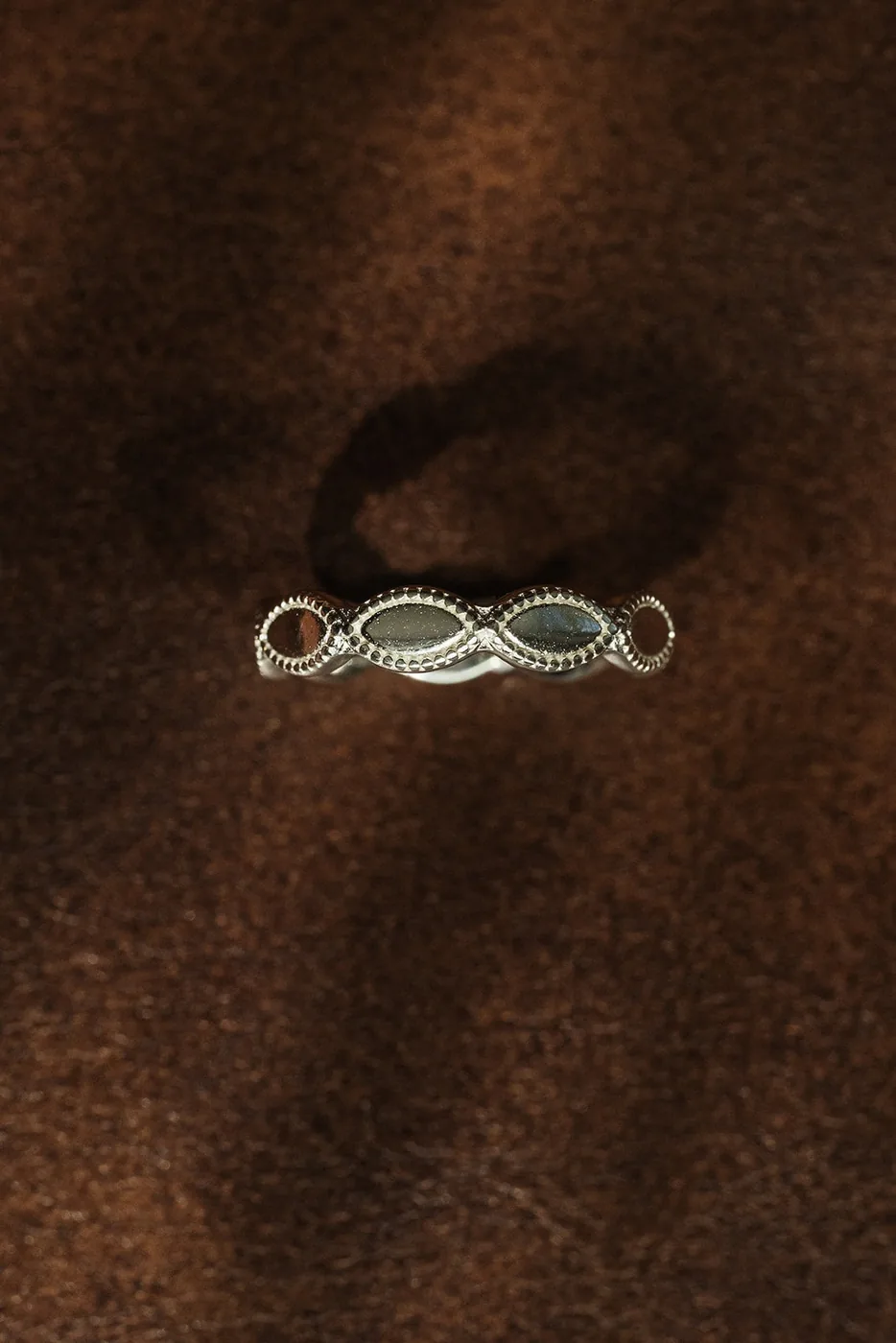
Silver tarnish is a surface reaction, not necessarily a sign that jewelry is poor quality or has been neglected. A bright silver piece may gradually turn yellow, brown, gray, or nearly black as its surface reacts with substances in its surroundings. Gentle care can improve its appearance, but the right approach depends on more than the metal: plating, stones, decorative finishes, adhesives, and enclosed keepsake materials all affect what is safe.
The useful question is not simply how to remove silver tarnish as quickly as possible. It is how to preserve the whole piece while addressing the unwanted discoloration. Start by identifying what you have, deciding whether the darkening is actually unwanted, and choosing the least aggressive suitable treatment. A plain sterling chain and a silver pendant containing a delicate inclusion should not automatically receive the same cleaning routine.
What makes silver darken, and why the rate varies
Silver tarnish commonly develops when silver reacts with sulfur-containing substances, forming a surface layer that includes silver sulfide. Small amounts of these substances can occur in ordinary indoor environments. Air exposure, humidity, handling, and contact with certain materials influence how quickly the surface changes. The resulting color may be uneven because different parts of a piece encounter different conditions.
In U.S. materials guidance, sterling silver is at least 925 parts per thousand silver. Its remaining constituents can also influence surface behavior. Silver tarnish does not, by itself, establish a piece's silver content, and a bright appearance does not establish it either. A stamp such as 925 is useful information to investigate, but a hallmark alone is not proof of authenticity.
Two similar pieces can darken at noticeably different rates. For example, a chain stored in an open bathroom dish may experience more moisture and product residue than a ring kept dry in a closed compartment. That difference does not prove that one alloy is better. Surface finish, frequency of wear, and exposure history complicate the comparison.
Sometimes what looks like silver tarnish is partly dirt, lotion, or another surface deposit. Sometimes it is wear that exposes a different metal beneath silver plating. A patch that remains coppery or yellow after gentle wiping deserves closer assessment rather than harder rubbing. Cleaning cannot replace missing plating, and repeated polishing can make a thin plated layer wear further.
Dark areas may also be intentional. Recessed details on an oxidized design are often meant to contrast with brighter raised surfaces. Removing all silver tarnish indiscriminately can erase that appearance. Before cleaning an unfamiliar piece, compare the darkening with its original description or photographs, and ask whether any blackened areas are part of the intended finish.
Choose a silver tarnish treatment by construction
Before treating silver tarnish, establish whether the surface is uncoated sterling, silver-plated, gold-plated over silver, intentionally oxidized, or protected by a coating. If the material description is unclear, pause. The jewelry collection showcase can help you identify the design you are asking about, but readers should ask D LOVE JEWELRY to confirm current material and care details for the particular piece.
Next, look beyond the metal. Pearls, delicate gems, resin-based elements, organic materials, and glued settings may be vulnerable to moisture, solvents, heat, or mechanical stress. A cleaning method that suits a bare silver surface can be unsuitable for the object surrounding it. Even a small pendant can contain several materials with conflicting care needs.
For a confirmed, uncoated sterling piece without sensitive components, light silver tarnish may respond to a clean, soft cloth or a silver polishing cloth approved for that finish. Use light pressure and inspect frequently. A treated polishing cloth is not interchangeable with an ordinary cloth: its cleaning agents should stay away from components for which they are not approved.
- Plain, uncoated silver: begin with dry, gentle wiping; consider an appropriate polishing cloth only when the finish is confirmed.
- Plated or coated jewelry: avoid abrasive polishing unless the maker specifically permits it.
- Oxidized details: preserve dark recesses rather than trying to make every surface bright.
- Mixed-material pieces: follow the most restrictive component's care requirements.
For example, a smooth sterling band may tolerate careful hand polishing, while a silver-framed pearl pendant needs a more selective approach. These are general examples, not descriptions of D LOVE JEWELRY products. If the finish or stone is uncertain, the safest immediate action is to stop treatment and obtain specific guidance rather than experiment.
Heavy silver tarnish in chain links, beneath settings, or around textured details creates a tradeoff: stronger cleaning may reach more of the surface, but it can also affect finishes or vulnerable components. Do not assume an ultrasonic cleaner is safe because the metal itself is silver. The GIA jewelry-care guidance explains why ultrasonic cleaning requires caution with certain gems and settings.
A gentle cleaning routine, with clear stopping points
For light silver tarnish, begin at a clean, dry workspace with good lighting. Examine clasps, settings, and joints before touching the surface. If anything is loose, cracked, or separating, postpone cleaning. Work over a soft cloth rather than an open sink, where a small item can disappear and a dropped stone may be difficult to find.
Use a fresh, soft cloth to remove fingerprints and loose residue. Support thin chains instead of pulling them taut through your fingers. Wipe broad surfaces gently and avoid catching fibers in prongs. Check the appearance after a few passes; continued rubbing without visible improvement is a reason to reassess the material, not increase pressure.
If silver tarnish remains and a polishing cloth is appropriate, work on a small accessible area first. Keep the cloth away from pearls, resin, and other sensitive components. Follow the cloth manufacturer's directions, including any warning about washing it. A dark mark on a treated cloth can occur during polishing, but it does not authenticate the metal.
A brief wash with lukewarm water and a small amount of mild soap may be suitable only for a confirmed water-safe piece. Do not make soaking the default, especially for hollow constructions, glued components, or enclosed inclusions. If washing is permitted, rinse thoroughly and dry carefully with a soft cloth, including accessible crevices, before storage.
Avoid treating silver tarnish with toothpaste, abrasive powders, or vigorous scrubbing. These can scratch surfaces and wear finishes. Household foil-and-baking-soda baths are also a poor universal solution: immersion, heat, and the removal of intentional oxidation may be inappropriate. Commercial dips should not be used on an unidentified or mixed-material piece simply because the label mentions silver.
Stop if the surface becomes patchy, another color appears beneath it, a stone moves, or the finish changes unexpectedly. Persistent silver tarnish does not justify repeated experimentation. For a meaningful or unfamiliar piece, send a clear description and photographs through the email consultation contact page, and ask D LOVE JEWELRY to confirm whether any recommended care or assessment is currently offered.
Reduce exposure without expecting permanent brightness
Preventing silver tarnish entirely is usually an unrealistic goal for exposed silver. Slowing it is more practical. Put jewelry on after fragrance, lotions, and hair products have settled, and remove it before swimming, cleaning with household chemicals, or activities that leave it wet. Chlorine and other chemicals can harm jewelry beyond merely changing its color.
After wear, wipe suitable pieces gently and let them become fully dry before storing them separately. A closed compartment or suitable jewelry pouch reduces exposure and prevents pieces from scratching one another. Choose storage materials intended for jewelry rather than wrapping silver in newspaper or placing it against rubber bands, which can introduce unwanted substances.
Anti-tarnish strips or suitable storage bags may help slow silver tarnish, but they do not replace cleaning or material-specific care. Follow their instructions and replacement guidance. Avoid storing jewelry in a humid bathroom, and do not assume a sealed container is beneficial if moisture is trapped inside. Dryness matters as much as separation.
Regular wear sometimes keeps accessible surfaces brighter through gentle friction, yet it is not a dependable silver tarnish prevention method. Body moisture, cosmetics, and environmental exposure vary. A piece worn daily may need brief wiping more often, while one stored for months may need attention before wear. The everyday jewelry showcase is a starting point for discussing how a design fits your routine, not a guarantee of maintenance-free wear.
For cremation or breast-milk keepsakes, silver tarnish on an outer frame should be considered separately from the care of the inclusion. Do not immerse the piece or apply a dip without explicit guidance for its full construction. If exploring a cremation jewelry keepsake, obtain written material-specific instructions; before sending any inclusion, also obtain applicable local information and confirmed instructions.
A little darkening may be acceptable, especially when it complements texture or recalls years of wear. You do not need to restore a mirror finish every time the surface changes. Aim for a clean, stable piece whose intended details remain intact. Gentle care succeeds when it protects the jewelry as a whole, not merely when it makes the silver brighter.